

Published by American Structural Pest Control West | Serving the South Bay, CA
Rodents don’t end up in your home by accident. They are drawn there by specific conditions that your property is providing whether you realize it or not. Food, water, shelter and warmth are the four things every rodent is looking for and a surprising number of everyday habits and household features check one or more of those boxes without the homeowner ever connecting them to a pest problem.
Understanding what attracts rodents to your property is one of the most practical things you can do to reduce your risk. Some of the biggest attractants are things that feel completely harmless in the moment. A garage door left open on a nice afternoon. A pet bowl left out overnight. A pile of boxes in the corner of the attic that hasn’t been touched in two years. In the South Bay where the weather is beautiful and the temptation to leave doors and windows open is real and constant, these small things add up faster than most people expect.
This article walks through the most significant attractants we see in South Bay homes and what you can do about each one.
The Pheromone Factor: Why One Rodent Leads to More
Before we get into the specific attractants it’s worth understanding something about rodent behavior that changes how seriously you should take even a single sighting. Rodents communicate through scent. Their urine and feces contain pheromones that leave signals in the environment and those signals are detectable by other rodents from a significant distance.
When a rat or mouse has been active inside or around your home, the pheromone trail it leaves behind essentially functions as an advertisement to other rodents in the area. It signals that this structure is accessible, that food or shelter has been found and that it’s a viable destination worth investigating. This is one of the reasons why rodent problems tend to compound over time rather than stay contained. One animal finding its way in and establishing even a brief presence can attract others who were never going to find the structure on their own.
It also explains why addressing a rodent problem promptly and thoroughly matters so much. The longer a rodent has been active in a space the stronger those pheromone signals become and the more actively they draw in new animals. Even after trapping is complete and the immediate population has been addressed, those scent signals can persist in the environment for an extended period. This is part of why exclusion work is such a critical part of any complete rodent program. Sealing entry points significantly reduces the ability of new rodents to act on those signals, even though the scent itself may linger for some time. It is not a permanent guarantee but it is the most important physical step you can take.
Food Sources: The Primary Driver
Free feeding pets
This is one of the most common and most overlooked attractants we encounter in South Bay homes. A bowl of dry kibble left on the kitchen floor or on the back patio overnight is essentially an open buffet for any rodent in the area. Rodents are opportunistic feeders and a reliable consistent food source is exactly the kind of thing that keeps them coming back and encourages them to establish a presence close to where that food is.
We strongly recommend never free feeding pets. Put food down at set meal times and pick it up when your pet is done eating. Store pet food in hard-sided sealed containers rather than in the original bag, which rodents can chew through with ease. This applies indoors and outdoors equally. An outdoor feeding station for a cat or dog is an invitation that extends well beyond the intended recipient.
Unsecured trash
Trash cans without properly seated lids, bags left outside overnight before collection day and bins that aren’t closed all the way are significant food sources for rodents. Roof rats in particular are adept at accessing trash containers and finding their way into areas most homeowners assume are secure. Making sure your trash lids are fully closed, bringing bags outside as close to collection time as possible and keeping the area around your bins clean are straightforward habits that remove a major attractant from your property.
Fruit trees and fallen produce
The South Bay has no shortage of properties with citrus trees, avocado trees and other fruit-bearing plants and fallen or rotting fruit on the ground is one of the most reliable rodent attractants in this area. Roof rats in particular are known to feed on citrus and will establish travel routes between fruit trees and a nearby structure if the opportunity exists.
Picking up fallen fruit promptly, harvesting ripe fruit regularly rather than letting it accumulate on the tree or on the ground and being aware of any fruit trees on neighboring properties that overhang or border your yard are all steps worth taking.
Bird feeders
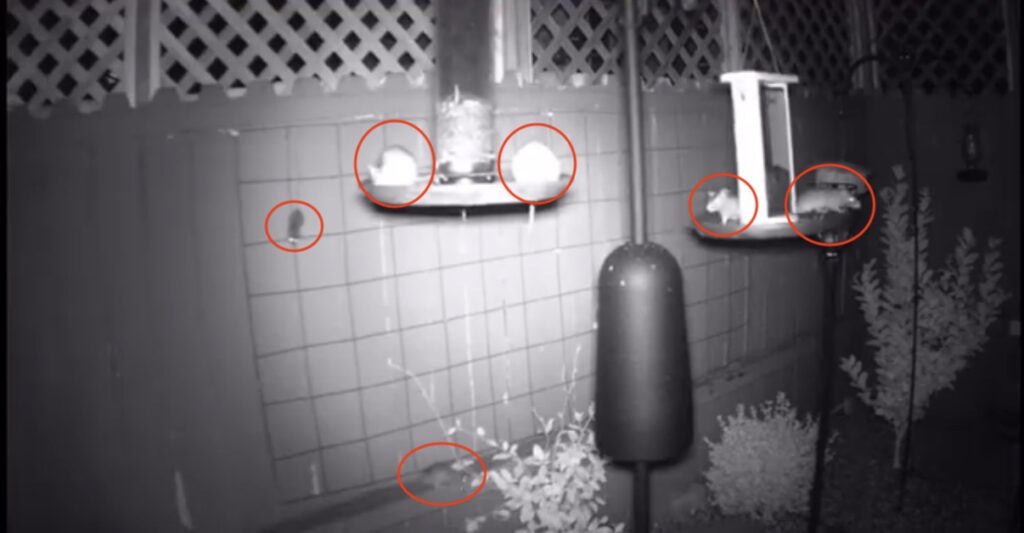
Bird feeders are a topic that comes up often in the South Bay and the connection to rodents is direct and more significant than most people expect. The obvious concern is seed that falls to the ground and accumulates as a ground-level food source. But rodents don’t limit themselves to what’s already fallen. We have game camera footage of a rat scaling a wall and leaping directly into a bird feeder to get to the seed inside. They will go to remarkable lengths to access a food source and a bird feeder is a reliable and highly visible one.
If you’re not willing to remove the feeder entirely, placing it well away from the structure, using a catch tray to reduce spillage and cleaning up fallen seed regularly can reduce the risk somewhat. But the honest answer is that bird feeders and rodent prevention don’t coexist easily.
Shelter and Harborage: What Rodents Hide In
Clutter inside and outside the home
Clutter is a rodent’s best friend. Stacked boxes in the garage, accumulated debris in the attic, piles of stored materials along the side of the house, overstuffed storage rooms and rarely disturbed corners throughout the home all provide the warm sheltered spaces that rodents need to nest and feel safe.
This applies equally indoors and outdoors. Clutter along the exterior of the home, woodpiles stacked against the wall, old furniture or equipment sitting unused in the yard and debris that accumulates in corners of the property all create harborage habitat that brings rodents closer to the structure. The closer they are the more likely they are to find a way in.
Reducing clutter indoors and out, storing things in hard-sided sealed containers rather than cardboard boxes and making sure storage areas get looked at and turned over regularly are among the most effective things a homeowner can do to make their property less hospitable to rodents.
Attic and crawl space conditions
Attics and crawl spaces are prime rodent nesting territory. They’re warm, dark, undisturbed and often full of insulation that makes ideal nesting material. Roof rats in particular favor attic spaces and once established there they can be active for a long time before the homeowner is aware of anything beyond the occasional sound in the ceiling.
Keeping attic access points properly sealed, minimizing stored materials in the attic that create additional harborage and making sure insulation hasn’t been disturbed or compromised are all worth staying on top of.
Dense landscaping against the structure
Ivy, dense shrubs, overgrown ground cover and vegetation that presses directly against the exterior walls of your home creates a sheltered corridor that rodents use to move along the structure while staying hidden. This kind of dense low ground cover is particularly common in South Bay neighborhoods and it’s one of the most consistent contributors to rodent pressure we observe.
Keeping a clear zone between any ground cover or dense vegetation and the foundation of your home, trimming shrubs back from the walls and removing ivy from the structure itself are all steps that reduce the sheltered access routes rodents rely on.
Access and Entry: The South Bay Open Door Problem
Here’s one that is uniquely relevant to anyone living in the South Bay. The weather here is genuinely exceptional and it is completely normal to have garage doors, back doors, sliding glass doors and windows open for extended periods throughout the day. It’s one of the great pleasures of living here. It is also one of the most consistent ways rodents enter South Bay homes.
An open garage door left unattended for an afternoon is an open invitation. A sliding door left open while you’re in another part of the house, a screen door with a gap at the bottom or a door that’s propped open while you bring in groceries are all opportunities a rodent can and will take advantage of. Roof rats are fast, they move along walls and they are very good at slipping through an opening before anyone notices.
We’re not suggesting you stop enjoying the beautiful South Bay weather. We’re suggesting that unattended open doors are worth being mindful of, especially at dusk and after dark when roof rats are most active. A door that’s open while you’re present and paying attention is a very different situation from one that’s been left open while you’re elsewhere in the home.
Water Sources
Like every living creature rodents need water and they will establish themselves close to a reliable source. Leaking hose bibs, dripping outdoor faucets, pet water bowls left outside overnight, irrigation systems that create consistently damp soil and birdbaths that aren’t managed are all water sources that make your property more attractive.
Fixing leaks promptly, bringing pet water bowls inside at night, adjusting irrigation schedules to avoid unnecessary pooling and managing any features on your property that hold standing water all contribute to making your yard a less hospitable environment for rodents looking to set up nearby.
Frequently Asked Questions
Can a rodent really get in through an open door that quickly?
Yes. Roof rats are quick, low-profile and extremely good at moving along walls and through doorways without being noticed. An unattended open garage door or back door, particularly in the evening hours when roof rats are most active, is one of the most common entry scenarios we see in the South Bay. The weather here makes open doors a way of life and rodents know it.
Does bird feeding really attract rodents?
More than most people realize. We have game camera footage of a rat scaling a wall and leaping directly into a bird feeder, which tells you everything you need to know about how motivated rodents are when food is involved. Ground-level seed accumulation is the obvious concern but rodents will access the feeder itself if they can find a route to it. If you’re dealing with rodent activity and you have a bird feeder nearby the two are almost certainly connected.
Why do I keep getting rodents even after I’ve had them treated?
The most common reason is that the entry points were never sealed. Trapping addresses the animals currently inside but without exclusion work the same gaps that allowed them in remain open. The pheromone trails left behind by previous rodent activity can also continue to attract new animals to the structure for an extended period. A complete rodent program addresses both the current population through trapping and the ongoing vulnerability through exclusion repairs.
How far will a rat travel to get to a food source?
Roof rats typically have a foraging range of around 100 to 300 feet from their nesting site though they will travel further if food sources are compelling enough. This means the attractants drawing rodents to your property may not be on your property at all. A neighbor’s fruit tree, an unsecured trash area down the street or a bird feeder two houses away can all contribute to rodent pressure on your home. This is one of the reasons a barrier approach, keeping your own property as unattractive as possible and maintaining sealed entry points, is the most reliable long-term strategy.
Think Your Property Might Be Attracting Rodents?
Give us a call and we’ll take a look. A walkthrough of your property is often all it takes to identify the main contributing factors and point you toward the steps that will make the biggest difference.
American Structural Pest Control West
Phone: (310) 699-3110
Email: office@aspcwinc.com
Website: aspcw.com
Serving Torrance, Redondo Beach, Hermosa Beach, Manhattan Beach, El Segundo and throughout the South Bay.