
Published by American Structural Pest Control West | Serving the South Bay, CA
We promised this article a couple of posts ago because we kept seeing the confusion come up. Customers asking about bait stations when they meant traps. Customers assuming the two were interchangeable. People picking one over the other based on price without understanding that they aren’t actually alternatives to each other at all.
Comparing rodent trapping to bait stations is a little like comparing gasoline to motor oil. Both play a role in making an engine run and you need both but they do completely different things and you would never substitute one for the other. The same logic applies here. Trapping and bait stations serve different purposes, are used in different situations and are not in competition with each other. Understanding the difference is one of the most practical things a South Bay homeowner can know when it comes to managing rodent activity around their home.
What Rodent Trapping Is For
Trapping has one primary purpose: addressing rodents that are already inside a structure. When rats or mice have gotten into your home through gaps in the roofline, attic vents, sub doors or any other entry point, trapping is how you deal with the population that’s currently living inside.
A trapping program starts with a professional inspection to identify where rodents are active and traveling inside the structure. Traps are then placed strategically along those travel routes in the locations most likely to intercept the animals. This is not guesswork. Placement is deliberate and based on what the inspection reveals. A trap placed in the wrong location or along the wrong path is a trap that will sit untouched while the rodents continue moving through the spaces you haven’t covered.
After traps are set our technicians return for regular checkbacks, approximately once per week over a 30-day period or four total visits whichever comes first. During each visit they remove any captured rodents, rebait and reset traps as needed and assess whether any adjustments make sense based on what activity the traps and our game cameras are showing.
We will not set traps just because a customer asks for them. If there is no evidence of active rodent activity inside the structure there is no reason to trap and we will tell you that honestly. Trapping is a targeted response to a specific situation, not a standard add-on.
What Bait Stations Are For
Let’s be clear about this upfront because it’s one of the most common misconceptions we encounter: bait stations are not traps. They do not catch or contain rodents. A rodent that enters a bait station is expected to enter freely, access the bait and leave. The station is designed to lure rodents to the bait, not to hold them inside.
Bait stations serve an entirely different function from trapping. They are designed to manage and deter rodent activity in the environment around your home so that activity stays away from the structure rather than concentrated near it. Rodents are always going to be present in the South Bay. They live in the landscaping, along fence lines, in nearby parks and open spaces and in the surrounding neighborhood. Bait stations give them a highly attractive target in a controlled location, drawing activity toward the station and away from your home.
Think about it this way. We can’t control how fast rodents reproduce or how many are present in the surrounding environment. What we can do is influence where they are most active and deter them from getting close to the structure. That is the real purpose of a bait station program. It is about controlling activity around your home, not eliminating the entire rodent population in the neighborhood.
How Bait Stations Are Designed
One thing that surprises a lot of people the first time they see a bait station is that some appear empty when they pick it up and look through the openings. This is completely by design and it’s worth explaining so customers know what they’re looking at.
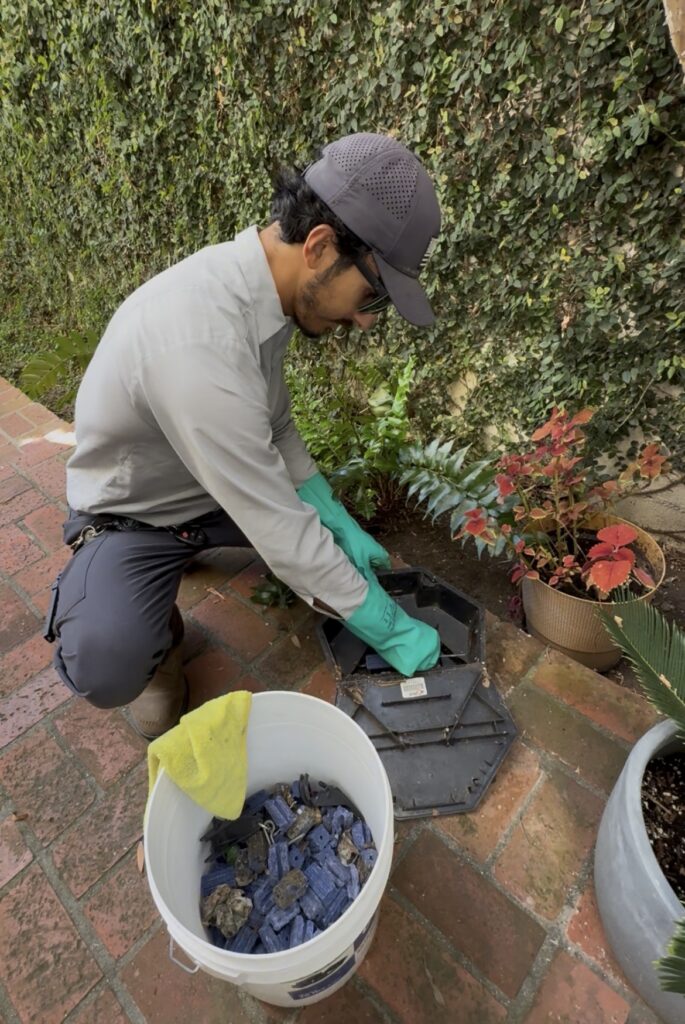
Most bait stations have two openings on opposite ends that allow rodents to enter and exit freely. When you look through one opening you might see straight through to the other side. But the bait inside is not visible from those openings because the station contains internal baffles, dividers that create a pathway the rodent must navigate to reach the bait. The rodent enters through one opening, follows the path created by the baffles and accesses the bait inside. Those same baffles prevent hands, paws and fingers from reaching the bait directly through the openings.
This design is what makes the station tamper-resistant. Our bait stations are also locked and can only be opened with a specialized key that only our licensed technicians carry. The bait block itself is secured inside on a rod so it cannot be carried off. The station is also sturdy enough to resist crushing or breaking under normal conditions.
How We Place and Monitor Bait Stations
Bait station placement is not random. During every inspection our technicians take note of how many stations would be appropriate for the property and where the most beneficial placement would be based on the layout of the yard, the landscaping, the proximity to neighboring properties and any evidence of rodent activity in the surrounding environment. A station placed in the wrong location is a station that won’t get used.
Because bait stations need to be checked and refilled on a consistent schedule we only offer them as a monthly service. Bait that has been consumed needs to be replenished and stations that have been hit heavily may need to be adjusted or repositioned while ones that aren’t seeing activity may be better placed elsewhere. Our technicians evaluate all of this on every visit.
If a technician notices that one station is being hit particularly hard while another is barely being touched they will make adjustments based on what the activity patterns are telling them. That kind of ongoing assessment is what makes the program effective over time.
One thing we always ask of customers is not to move the stations themselves. The placement is strategic and moving a station, even a short distance, can take it out of an active travel route entirely. This also applies to anyone else who has access to your property. If you have a landscaper, a pool service technician or anyone else who works around your yard regularly please let them know that the bait stations are placed intentionally and should not be moved or disturbed. If you have a concern about a station’s location contact your technician and they can assess whether an adjustment makes sense.
An Important Rule: No Bait Stations Around Unaddressed Entry Points
This is something we feel strongly about and want to be clear on. We will not place bait stations around a structure that has known and unaddressed entry points and we will never run a bait station program at the same time as an active trapping program. Here’s why both of those rules matter.
The rodenticide in a bait station works by causing internal hemorrhaging. Because rodents are physically unable to vomit they cannot expel the bait once consumed. As the effects set in they instinctively seek out a tight confined space, the same way a person with a stomach ache curls up looking for relief. If a structure has open entry points and a bait station nearby a rodent that has consumed bait will very likely make its way into the structure looking for that tight space and die deep inside a wall cavity, the attic insulation or somewhere else that is inaccessible. The result is a decomposition odor problem that can be significant, persistent and expensive to address.
It is not common for rodents to die inside the bait station itself but it does happen on occasion. When it does we leave the decomposed rodent inside rather than removing it immediately. This might sound counterintuitive but it actually works to our advantage. The scent of a decomposed rodent inside the station is a powerful attractant that draws other rodents directly to it. It becomes one of the most effective lures we have and reinforces exactly what the station is designed to do, keep rodent activity concentrated at the station and away from the structure.
This is exactly why we require that entry points are sealed before bait stations are ever placed. The station should be the most attractive destination in the area, not a stop on the way into your home. Seal the structure first. Then manage the activity in the surrounding environment with bait stations. That sequence protects both the effectiveness of the program and the integrity of your home.
Why You Might Need Both
Trapping and bait stations aren’t alternatives. They are two tools that address two different aspects of the same challenge.
If you currently have rodents inside your structure you need trapping to address the active interior situation. Once that’s resolved bait stations help manage the exterior activity and deter rodents from getting close to the structure going forward. On the other hand if your structure is well sealed and you’ve never had an interior rodent problem, bait stations are a proactive way to keep exterior activity under control and reduce the likelihood of ever having one.
The homeowners who deal with the fewest repeat rodent situations are almost always the ones who have all three pieces in place: exclusion work to physically seal the structure, trapping when something gets inside and bait stations to manage the activity in the surrounding environment on an ongoing basis.
A Note on Store-Bought Bait
Consumer rodenticide products are available at hardware stores but they are not the same as a professionally managed bait station program and they carry real risks including secondary poisoning of pets and wildlife that are worth understanding. We will be dedicating a full article to this topic because it deserves a thorough and honest treatment. For now the short version is that professionally managed stations with tamper-resistant enclosures, locked access and strategic placement are a very different thing from placing a bait block somewhere in your garage and walking away.
Frequently Asked Questions
Can bait stations replace trapping if I have rodents inside my home?
No. Bait stations are not traps and they are not designed to address rodents inside a structure. If you have active rodent activity inside your home trapping is the appropriate response. Bait stations are then valuable as part of an ongoing exterior management approach once the interior situation has been resolved.
Why do bait stations look empty when I look through the openings?
The bait is not visible through the entry openings by design. The station contains internal baffles that create a pathway the rodent must follow to reach the bait. This prevents hands, paws and fingers from accessing the bait directly through the openings while allowing rodents to navigate their way in freely. The station is also locked and can only be opened with a specialized key that our licensed technicians carry. If a station looks empty from the outside that doesn’t mean there’s no bait inside.
Can I move a bait station to a spot that seems more convenient?
Please don’t and please ask anyone else with access to your property not to move them either. The placement is strategic and based on observed activity patterns and property layout. Moving a station even slightly can take it out of a rodent’s natural travel route and make it far less effective. If you feel a station is in the wrong spot contact your technician and they can assess whether an adjustment is warranted.
Will bait stations eliminate all rodents around my home?
No and we want to be honest about that. Rodents reproduce quickly and the surrounding environment will always have some level of rodent activity. The goal of a bait station program is not elimination. It is controlling and deterring activity around your home and keeping rodents drawn toward the station rather than toward the structure. That’s a realistic and meaningful outcome and it’s what the program is designed to deliver.
Want to Talk Through the Right Approach for Your Property?
Whether you’re dealing with an active interior situation, looking to set up exterior activity management or both, we’re happy to walk you through what makes sense for your home. Give us a call or send us an email and we’ll figure it out together.
American Structural Pest Control West
Phone: (310) 699-3110
Email: office@aspcwinc.com
Website: aspcw.com
Serving Torrance, Redondo Beach, Hermosa Beach, Manhattan Beach, El Segundo and throughout the South Bay.