
Published by American Structural Pest Control West | Serving the South Bay, CA
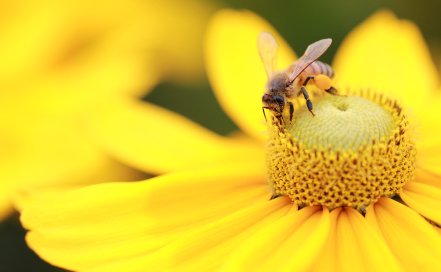
If you’ve ever spotted a hive on your property and wondered whether you’re legally allowed to remove it or whether bees have some kind of protected status in California, you’re asking a question that comes up more often than you might think. The answer is nuanced and depends on the species of bee you’re dealing with as well as the circumstances surrounding the hive.
At American Structural Pest Control West we care deeply about bees. They are vital to the health of our local ecosystems and to the food supply we all depend on. We only recommend removal when there is a genuine safety concern and even then we approach it thoughtfully. Understanding the legal landscape around bee protection in California is part of that thoughtfulness and we think every South Bay homeowner deserves to have this information.
The Short Answer
Bees in California occupy a complicated and evolving legal space. Honey bees are not listed as a protected species under state or federal endangered species law but they are protected in a practical sense through pesticide regulations that restrict how and by whom certain products can be applied near them. Native bumble bees, on the other hand, have achieved a much stronger level of legal protection in recent years through a landmark series of California court decisions. And the legal reasoning behind that protection is one of the more interesting stories in California environmental law.
Honey Bees: Practically Protected Through Pesticide Law
Honey bees are not classified as a threatened or endangered species but they are protected in a meaningful way through California’s pesticide regulations. The California Department of Pesticide Regulation enforces rules that govern how products toxic to bees can be used and under what circumstances.
Perhaps most significantly, California’s Pollinator Protection Act restricts the over-the-counter sale of neonicotinoid pesticides, a class of products that have been linked to significant declines in bee populations. These products, which were previously available at hardware stores and garden centers, are now limited to use by trained and licensed professionals. This means that a homeowner cannot legally purchase and apply the products most harmful to bees on their own property without a license.
This is one of the less-discussed reasons why working with a licensed pest control company matters from an environmental standpoint. Licensed technicians are trained in how to apply products in ways that minimize impact on pollinators. The blanket application of harmful products by untrained individuals is exactly the kind of activity these regulations were designed to prevent.
Honey bees are also practically protected by the sheer economic and ecological importance they carry. California’s agricultural economy depends heavily on honey bee pollination and the state has a strong institutional interest in their survival. If you find a honey bee hive on your property the most recommended first step in almost any situation is to contact a local beekeeper who may be able to relocate the colony rather than destroy it.
Native Bumble Bees: A Landmark Legal Protection
The story of bumble bee protection in California is one of the more remarkable developments in recent state environmental law and it contains a detail that sounds almost too strange to be true.
Four species of native California bumble bees, the western bumble bee, Franklin’s bumble bee, the Suckley cuckoo bumble bee and Crotch’s bumble bee, are now eligible for protection under the California Endangered Species Act. These species have experienced dramatic population declines and their protection was the result of years of legal effort by conservation organizations.
Here’s the part that surprises people. California’s Endangered Species Act protects birds, mammals, fish, amphibians, reptiles and plants. Bees are insects, not fish. So how did they qualify? The answer lies in how California’s Fish and Game Code defines the word fish. The code’s definition of fish includes invertebrates broadly, meaning both aquatic and land-dwelling invertebrates. Under that definition bees, as invertebrates, are legally eligible for protection. In 2022 the California Supreme Court allowed this interpretation to stand, confirming that native bumble bees can be listed and protected under state law.
The practical implication for homeowners is straightforward. If you encounter a bumble bee nest on your property, treating it casually or attempting to eliminate it without understanding what species you’re dealing with is a risk worth avoiding. The Crotch’s bumble bee in particular has historically occurred in southern coastal habitats, which includes the greater Los Angeles area and the South Bay. It is not something to handle without knowing what you’re looking at.
What This Means for South Bay Homeowners
The South Bay is home to a healthy and active bee population year-round thanks to our mild climate and the abundance of flowering plants and landscaping throughout the area. Honey bees, bumble bees, carpenter bees and a variety of native solitary bee species are all present and active in our neighborhoods.
Most of the time bees and people coexist without any real conflict. Bees foraging in your garden or yard are doing exactly what they’re supposed to do and they pose no meaningful threat when left undisturbed. The situations that require a professional assessment are more specific: a hive that has established itself inside a wall, under eaves or in a structure in a location that puts people or pets at regular risk of disturbance or contact.
Even in those situations our first question is always whether removal is truly necessary or whether a safer approach exists. We take that question seriously because we genuinely believe in the value of these animals and we don’t treat a bee hive the way we would treat a wasp nest. The approach is different, the consideration is different and the outcome we’re aiming for whenever possible is one that protects both the homeowner and the colony.
If You Find a Hive: A Few Practical Points
If you discover a bee hive on or near your property the most important thing you can do first is stay calm and give it space. Bees are not aggressive by nature and a hive that is not disturbed is not a hive that poses a risk. Resist the urge to spray it, seal it or disturb it in any way before you’ve had a professional assess the situation.
We’re always happy to come take a look first. Identifying the species matters before any next step is taken and that’s not always something a homeowner can do confidently on their own. Once we’ve assessed the situation we can help point you in the right direction, whether that means we handle it, a beekeeper is the better call or the honest answer is that no action is needed at all.
In many cases a beekeeper can relocate a honey bee colony safely and at no cost to you. Reaching out to a local beekeeper is a great option once the species has been confirmed and relocation is determined to be the right path forward.
We will always be honest with you about whether removal is necessary. If a hive is in a location where it doesn’t pose a real safety risk, we’ll tell you that. Our goal is to give you the information you need to make the right decision, not to perform a service that isn’t warranted.
The Bigger Picture
California’s evolving legal protections for bees reflect a growing recognition of what scientists and beekeepers have been saying for decades. Bees are not a nuisance to be managed. They are essential infrastructure for the natural world and for the food systems that feed us.
The restriction of bee-harmful pesticides to licensed professionals, the legal protection of native bumble bee species and the institutional commitment to honey bee health in an agricultural state like California all point in the same direction. Bees deserve to be treated with care and their removal should be a last resort, not a first response.
We are proud to be a company that shares that view. It’s not just good environmental practice. It’s the right thing to do.
Frequently Asked Questions
Are honey bees a protected species in California?
Honey bees are not listed as a threatened or endangered species under California or federal law. However they are practically protected through pesticide regulations that restrict the use of products harmful to pollinators and limit certain pesticide applications to licensed professionals. They are also protected by strong institutional and economic interest in their survival given California’s dependence on pollination for agriculture.
Are bumble bees protected in California?
Yes. Four species of native California bumble bees are eligible for protection under the California Endangered Species Act following a landmark 2022 court ruling. The legal protection was made possible by the state’s broad definition of fish under the Fish and Game Code which includes terrestrial invertebrates. This means bumble bees can be listed as threatened or endangered species under state law.
Can I remove a bee hive from my property?
You are not prohibited from addressing a hive that poses a genuine safety risk on your property but we strongly recommend consulting a professional before taking any action. Disturbing a hive without understanding the species or the situation can create a far more dangerous scenario than leaving it alone. A licensed pest control company or local beekeeper can assess the situation and advise on the safest and most appropriate course of action.
Will ASPCW remove a bee hive?
Bee removal is something we can do when it is absolutely necessary but it is never our first choice or go-to response. Before anything else we want to come out, assess the situation and understand what species we’re dealing with and what risk it actually poses. From there we’ll give you an honest recommendation. If removal is truly warranted we can handle it. If relocation by a beekeeper is the better path we’ll tell you that. And if the honest answer is that the hive doesn’t need to be touched at all, we’ll say that too. Our goal is always to do right by both the homeowner and the bees.
What’s the difference between bees and wasps when it comes to removal?
The difference is significant both biologically and in terms of how we approach them. Wasps are predatory, more aggressive by nature and their nests do not contain honey or serve the same ecological function as bee colonies. Wasp nest removal is a more straightforward safety-driven service. Bee removal is approached with much more consideration for the colony itself and the ecological value it represents. We treat them very differently and for good reason.
Have a Bee Situation You’re Not Sure About?
Give us a call and we’ll talk it through honestly. Whether the answer is removal, relocation or simply leaving it alone we’ll give you a straight assessment and help you make the right call for your property and for the bees.
American Structural Pest Control West
Phone: (310) 699-3110
Email: office@aspcwinc.com
Website: aspcw.com
Serving Torrance, Redondo Beach, Hermosa Beach, Manhattan Beach, El Segundo and throughout the South Bay.