
Published by American Structural Pest Control West | Serving the South Bay, CA
Finding a wasp nest on your property can range from mildly inconvenient to genuinely dangerous depending on where it is, how large it is and which species built it. The right response depends on all three of those factors and the very worst thing you can do, as tempting as it is, is react immediately without knowing what you’re dealing with.
This article covers the wasp species most commonly found in South Bay homes and yards, how to assess a nest situation calmly and what to do next, including when to call us and what our removal service actually covers.
Common Wasp Species in the South Bay
Western yellowjackets
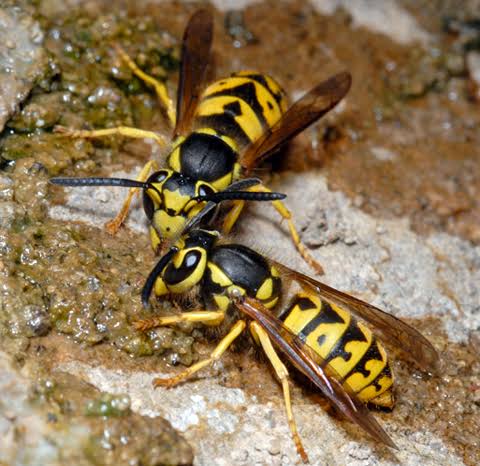
Western yellowjackets are the most commonly encountered and most aggressively defensive wasp species in Southern California. They are small, compact wasps with bold yellow and black markings and they are notorious for their willingness to sting repeatedly and without much provocation when they feel their nest is threatened. Unlike bees, which lose their stinger after a single sting and die as a result, wasps do not lose their stinger when they sting. They can drive it in and pull it out repeatedly, meaning a single wasp can sting you multiple times and an agitated colony responding to a disturbance can deliver an overwhelming number of stings very quickly. This is what makes a disturbed yellowjacket colony a genuinely serious safety situation rather than just an unpleasant one.
Yellowjackets nest in a variety of locations including underground burrows, wall voids, attic spaces and enclosed cavities under decking. Ground nests are particularly hazardous because they’re easy to disturb accidentally during yard work or outdoor activity. Wall void nests can go undetected for a long time and grow to significant size before homeowners realize something is there. By late summer yellowjacket colonies are at their largest and most aggressive, which is exactly when most encounters happen.
Paper wasps
Paper wasps are slender, elongated wasps with reddish-brown to yellow and black coloring depending on the species. Both the native Guinea paper wasp and the invasive European paper wasp are common throughout the South Bay. They build the distinctive open umbrella-shaped nests made from chewed wood fiber that most people picture when they think of a wasp nest, typically hanging under eaves, in doorframes, under deck railings, in shrubs and in other sheltered spots.
Paper wasps are generally less aggressive than yellowjackets and will not attack unless the nest is directly threatened. That said they will defend their nest if you get too close and a nest in a high-traffic area like above a doorway or under patio furniture is a safety concern regardless of the species’ temperament.
Mud daubers
Mud daubers are solitary wasps that build distinctive tubular nests out of mud on walls, eaves, fences and other structures. They are slender, often with a metallic sheen, and unlike social wasp species they are not defensive of their nests in the same way. A single mud dauber nest is almost never a meaningful safety concern and these wasps are actually beneficial predators that hunt spiders.
If you’re finding mud tube structures on your exterior walls or eaves and there are no wasps actively coming and going, it may simply be an old abandoned nest rather than an active one. Mud dauber nests can be removed manually without significant risk in most cases.
The First and Most Important Step: Don’t React Immediately
Whatever species you’re dealing with and wherever the nest is, the single most important thing to do when you first discover it is nothing. Step back, create distance and resist every instinct that tells you to spray it, knock it down or seal it up right now.
Disturbing a wasp nest without being prepared to deal with the response is one of the most common ways people get seriously stung. Yellowjackets in particular will pursue and sting repeatedly when their nest is threatened and a colony of hundreds or thousands of wasps responding to a disturbance is a situation that can escalate very quickly in a way that’s genuinely dangerous, especially for anyone with a sensitivity to wasp venom.
Take a moment to observe from a safe distance. Note where the nest is located, how large it appears to be, how much traffic you’re seeing coming and going and whether the location creates a real safety concern for people using that area of your property. That information shapes everything that comes next.
Assessing Whether the Nest Is an Immediate Concern
Not every wasp nest requires emergency removal and understanding the difference helps you respond proportionally rather than reactively.
A paper wasp nest tucked under an eave on a seldom-used side of your house, well away from foot traffic and entry points, is a very different situation from a yellowjacket colony established in a wall void adjacent to your back door or a ground nest right in the middle of your lawn. The species, the size of the colony and most importantly the location relative to where people spend time are all factors that determine how urgently you need to act.
If the nest is in a location that doesn’t create meaningful risk for the people and pets using your property, it may be worth monitoring rather than immediately removing. If it’s in a high-traffic area, near an entry point, accessible to children or pets or in a location where accidental disturbance is likely, that’s when removal makes sense.
What Not to Do
A few approaches that seem logical in the moment consistently make wasp nest situations worse.
Don’t spray the nest with a consumer spray can at close range during the day. Daytime is when the colony is most active and most alert. If you are going to attempt any kind of consumer treatment on a smaller paper wasp nest, early morning or late evening when wasps are less active and temperatures are cooler is the safer window. Even then the risk of agitating the colony is real.
Don’t seal the entrance to a wall void nest without removing or treating the colony inside first. Sealing the exit traps the colony inside the wall and wasps will find alternative exits, sometimes into the interior of your home. This turns an exterior problem into an interior one.
Don’t pour water, gasoline or any liquid directly into a ground nest. This agitates the colony immediately and creates a hazardous situation without addressing the problem effectively.
When to Call a Professional
Any nest that creates a meaningful safety concern for your household warrants a professional removal. This includes yellowjacket nests of any size given their aggression, any nest in or near a wall void, ground nest or enclosed space where the full extent of the colony can’t be seen, any nest that is large enough to contain hundreds of wasps and any situation where you or anyone in your household has a known sensitivity to wasp or bee venom.
If you’re not sure whether a nest needs professional attention, calling us to take a look is always a reasonable first step. We’d much rather assess a situation and tell you it’s manageable on your own than have someone get seriously stung attempting a removal that was beyond what they were prepared for.
ASPCW Wasp Nest Removal: What It Includes
Our wasp nest removal service is priced by the story of your home and covers up to five nests per service.
For first story nests the base price is $225. For second and third story nests the base price is $345. If you have more than five nests additional nests are $25 each for first story locations and $50 each for second and third story locations. For properties outside the standard South Bay service area an additional $50 out-of-area charge applies. All wasp nest removal services come with a 45-day warranty.
We treat the nest and the area around it using products and methods appropriate to the location and species. For enclosed or wall void nests the approach may differ from an exposed aerial nest and your technician will assess what’s needed on-site. After treatment the nest can typically be removed once wasp activity has ceased.
A Note on Beneficial Wasps
We mentioned this in our article on bees and it applies equally here. Not all wasps are a problem and many play genuinely useful roles in the ecosystem around your property. Mud daubers control spider populations. Paper wasps hunt caterpillars and other insects that damage garden plants. Even yellowjackets are beneficial predators earlier in the season before their colonies grow large enough to become a nuisance.
We take the same thoughtful approach to wasps that we do to bees. If a nest is in a location that doesn’t create meaningful risk we’ll tell you that honestly. Removal when it isn’t necessary is not something we recommend.
Frequently Asked Questions
How do I know if a wasp nest is active?
The clearest sign of an active nest is seeing wasps regularly coming and going from a specific location. Most social wasp colonies have a consistent flight path to and from the nest entrance. If you’re seeing regular wasp traffic at a particular spot under your eave, in a crack in your wall or emerging from the ground in your yard, that nest is active. An absence of activity, particularly in cooler months, may indicate an abandoned nest.
Can I remove a wasp nest myself?
We do not recommend DIY wasp nest removal and want to be direct about the risks involved. Wasps do not lose their stinger the way bees do, which means every wasp in a disturbed colony can sting you multiple times. An agitated colony can pursue you and deliver dozens or hundreds of stings in a very short window, which is a genuine medical emergency particularly for anyone with any level of sensitivity to wasp venom. Even small paper wasp nests carry real risk when disturbed without proper protective equipment. For yellowjackets, ground nests, wall void nests, enclosed nests or any large established colony, professional removal is not just a recommendation, it is strongly the right call. The consequences of getting it wrong are serious and in some cases life-threatening. Please call us before attempting removal yourself.
What happens to a wasp nest in winter?
In most cases the colony dies off as temperatures drop and the nest is abandoned. Only mated queen wasps overwinter and they do so individually in protected spots rather than in the nest itself. An abandoned nest will not be reused by the same colony the following year though a new queen may occasionally establish a new colony near an old nest site. Old abandoned nests can be removed safely once the colony has fully died off in cooler weather.
The wasp nest is in my wall. What should I do?
Call us. Wall void nests are among the more complex removal situations because the extent of the colony can’t be assessed from the outside and sealing the entrance without proper treatment can drive wasps into the interior of your home. A professional assessment and treatment is the right approach for any nest in an enclosed structural space.
Found a Wasp Nest and Not Sure What to Do?
Give us a call and we’ll help you figure out what you’re dealing with and whether professional removal makes sense. We’d rather you call with a question than deal with the aftermath of a nest that was disturbed the wrong way.
American Structural Pest Control West
Phone: (310) 699-3110
Email: office@aspcwinc.com
Website: aspcw.com
Serving Torrance, Redondo Beach, Hermosa Beach, Manhattan Beach, El Segundo and throughout the South Bay.